





Can You Save Money by Living on a Boat in the UK? (2025 Cost Breakdown)
Posted: November 18th, 2025
Can you save money by living on a boat in the UK in 2025?

The big question: can you really save money by living on a boat?
With UK inflation still well above the Bank of England’s 2% target - the consumer price index (CPI) rose by 3.8% in the 12 months to September 2025 - living costs continue to put pressure on households.
Meanwhile, average UK private rents have climbed to about £1,348 per month, showing a 5.7 % year-on-year increase (for the year to August 2025).
Average UK house prices are roughly £270,000, with the 12-month growth rate at around 2.8 %. (Office for National Statistics)
So it’s no surprise more people are asking: “Is living on a boat actually cheaper than renting or buying on land?”
The honest answer is: it depends. Living aboard can be cheaper - sometimes significantly - but only if you understand the real costs, choose the right boat and mooring, and it suits your lifestyle.
At Lakeland Leisure Boat Sales, we’ll walk you through the key factors so you can run the numbers for your situation.

What "living on a boat" actually means
When people talk about “living on a boat to save money”, they usually mean one of three things:
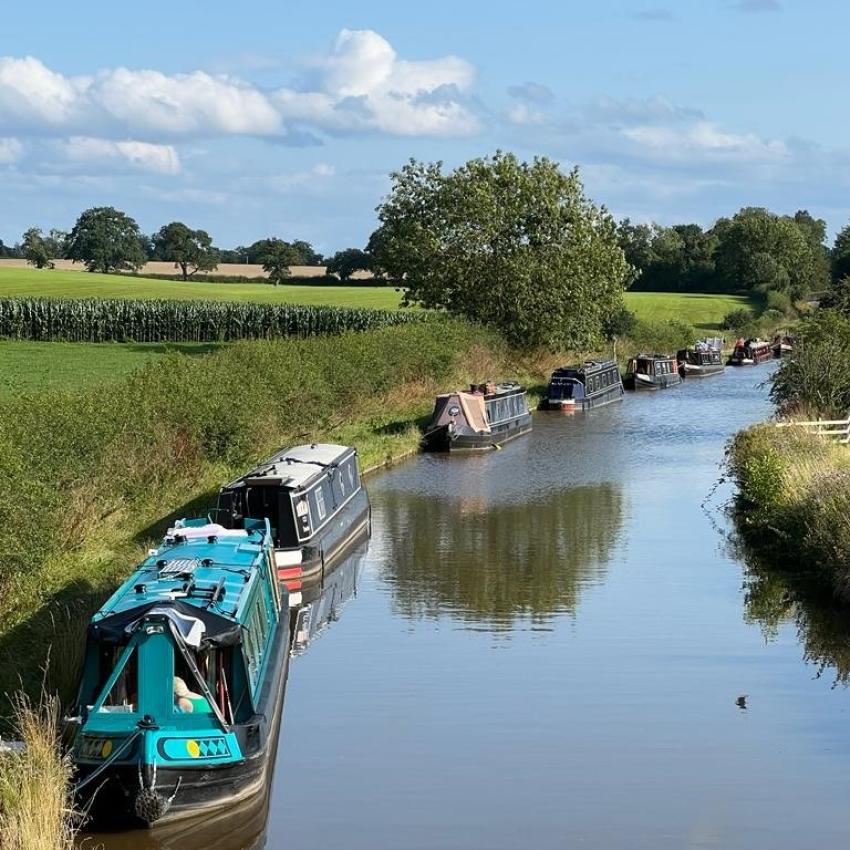
Continuous Cruising
Rules & Lifestyle: Must move regularly, no permanent mooring.
Potential Savings: Lower fixed costs, but higher time/effort and more cruising.
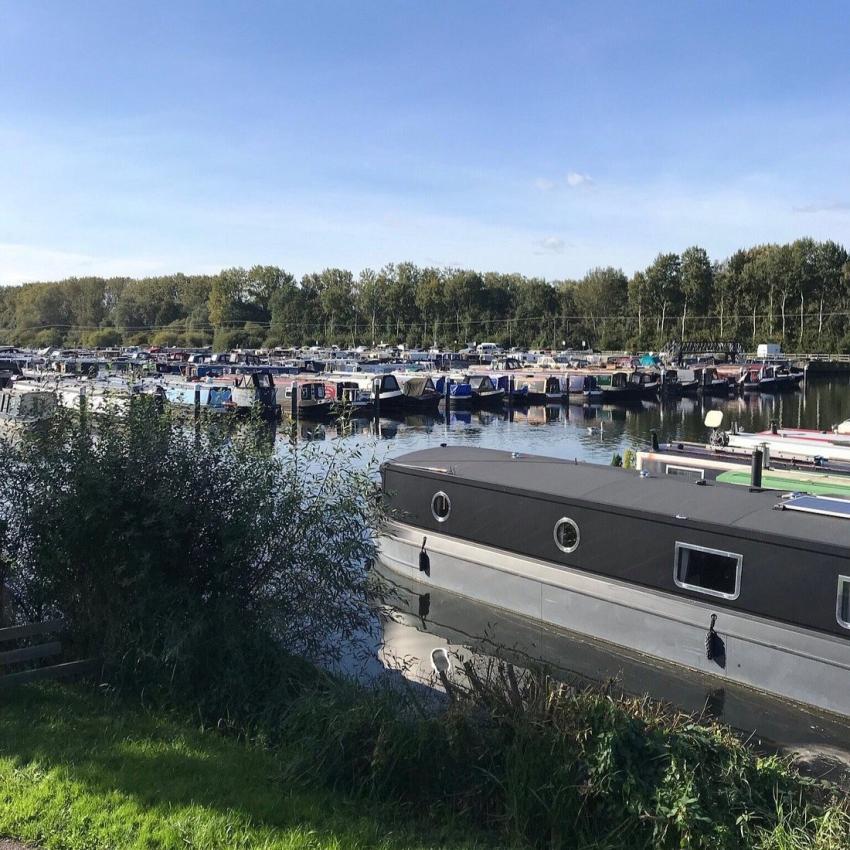
Leisure Mooring
Rules & Lifestyle: Officially for leisure use, not your primary residence.
Potential Savings: Medium savings, fewer legal allowances.
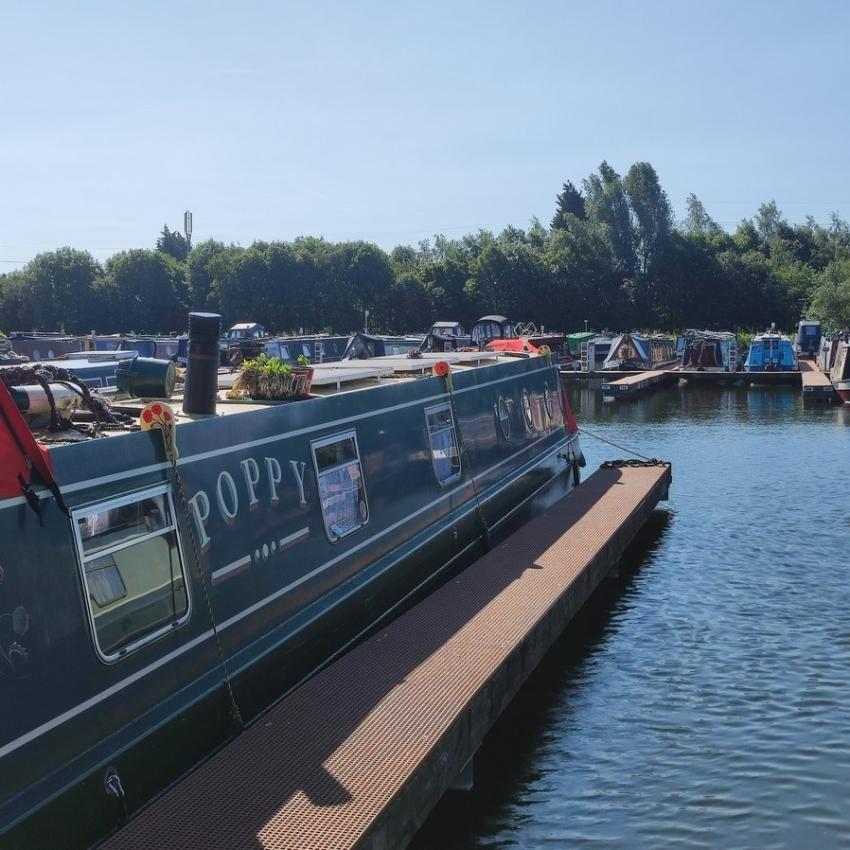
Residential Mooring
Rules & Lifestyle: Full legal home address, pay council tax.
Potential Savings: Fees are higher than leisure moorings, but still often less than city-centre rent.
Each of these options has very different costs, rules and practicalities, so comparisons to a house or flat will vary.

Upfront costs: boat vs house
Buying a house in 2025:
The average UK house price is around £270,000 (Zoopla, UK House Price Index) and higher in many urban areas.
England: £296k
Wales: £211k
Scotland: £194k
Even a modest first home can require:
Deposit: Often 10-20% (£27,000-£54,000 on a £270k home).
Mortgage costs: Heavily influenced by the 4% base rate and associated mortgage rates (Bank of England, Uswitch).
Legal, survey & moving costs.
Buying a boat:
Boat prices vary wildly, depending on:
Boat type (narrowboat, widebeam, Dutch barge, cruiser).
Length and layout.
Age, condition and previous maintenance.
Level of onboard equipment (insulation, heating, solar, tech, etc.).
However, it’s quite common to find a livable pre-owned narrowboat for significantly less than even a house deposit in some parts of the UK. A higher-spec widebeam suitable for full-time residential life will cost more, but often still less than buying a flat or house in a major city.
You’ll also need to budget for:
Hull survey before purchase.
Initial repairs/upgrades (stoves, insulation, batteries, solar, décor, etc.).
Licensing & insurance from day one.
Key point: Upfront, getting afloat is often more accessible than buying a house - especially if you don’t already have large savings. But unlike most property, boats are depreciating assets, not investments.

Ongoing costs: what does boat life really cost?
To see if you can save money, you need to tally the monthly and annual costs of boat life.
Core running costs
While exact figures vary, you should expect line items like:
Mooring fees (if you're not continuous cruising)Leisure marina mooring vs residential mooring.
Price varies by region, facilities and boat length.Canal or river licence: Paid annually to the relevant navigation authority.
Insurance: Third party at minimum; consider comprehensive cover for liveaboards.
Fuel
Electricity: Shore power at a marina (often metered) and/or investment in solar and batteries.
Solid fuel: Coal or logs if you use a multi-fuel stove for heating.
Pump-out or cassette toilet consumables: Plus water top-ups (usually low cost or included at moorings).
Maintenance & big-ticket items
This is where many new boaters underestimate costs:
Blackings & out-of-water maintenance every 2-3 years: Lift-out, hull inspection, anodes, painting.
Boat Safety Scheme (BSS) certificate every 4 years.
Engine servicing & repairs.
Interior upgrades & replacements: Stoves, batteries, solar controllers, appliances, soft furnishings.
Emergency fund for unexpected work (leaks, engine issues, etc.).
Think of this as your equivalent of service charge & building maintenance on a flat - but you are responsible for organising it.

Comparing living on a boat with renting or a mortgage in 2025
Versus renting
Average UK rents for new lets were around £1,300 per month in mid-2025 (Office for National Statistics) - and much higher in some cities.
England: £1,410 PCM
Wales: £815 PCM
Scotland: £1,004 PCM
London: £2,253 PCM
Living aboard can beat renting, especially if:
You choose a sensibly priced mooring outside the priciest city centres.
Your boat is well-insulated and energy-efficient, controlling winter heating costs.
You're comfortable doing some maintenance yourself (rather than paying trades for everything).
However:
If you pick a premium residential mooring in a high-demand area, your fees may be similar to or even more than a small flat's rent.
If your boat is old, poorly insulated, or needs constant work, repairs can eat into any savings.
Versus owning with a mortgage
With a 4% base rate and mortgage rates still relatively high compares to the 2010s (Bank of England), monthly mortgage payments - especially with high property prices - can be substantial.
Boat life can be cheaper month-to-month, particularly compared to stretching yourself to buy in an expensive area. But remember:
Your mortgage payment builds equity in a long-term appreciating asset (historically, at least).
Your boat, by contrast, is likely to depreciate and will one day need major refurbishment or replacement.
So, financially, living on a boat is less about "investment" and more about reducing your ongoing living costs and gaining lifestyle benefits.

Hidden financial factors to consider
Saving money isn't just about monthly bills. Consider these:
Time and effort
Continuous cruising requires regular moves, route planning and using services (water, pump-out, fuel).
Even in a marina, you'll spend more time on maintenance and DIY than in a typical flat.
Time has a value - especially if your work or family life is demanding.
Income and work patterns
Boat life is easier to make work financially if:
You can work remotely (good Wi-Fi and 4G/5G signal are essential).
Your commute doesn't equire long, expensive daily journeys from rural moorings into cities.
If you end up needing an expensive commute to maintain your job, it can wipe out any housing savings.
Council tax and services
Continuous cruisers usually don't pay council tax, but must manage without a fixed postal address and some local services.
Residential moorings typically attract council tax (often cheaper than a house, but still a cost).
Access to GP surgery, schools and other services can be trickier in some locations.
Comfort and winter costs
A well-designed boat can be cosy and warm - but:
Poor insulation = high heating bills and condensation.
Under-specced electric system = constantly running the engine or generator for power.
Investing in good insulation, heating and electrics may cost more upfront but can save substantially over several winters.

When living on a boat does save money
You're more likely to save money by living on a boat if:
✓ You're single or a couple without school-age children.
✓ You're flexible on location and not tied to the most expensive city-centre moorings.
✓ You're happy with a smaller space and a more minimalist lifestyle.
✓ You're prepared to learn basic maintenance and do regular checks yourself.
✓ You view the boat as a home and lifestyle choice, not a financial investment like a house.
In those circumstances, you may find:
Lower monthly outgoings than renting.
A smaller, more predictable set of bills once you've upgraded the boat for year-round living.
A lifestyle that feels richer - even if you're technically spending similar money - because you're on the water, in nature, and part of a boating community.

When boat life may not be cheaper overall
You may not save money (or even spend more) if:
✘ You insist on a prime, high-demand residential mooring in a big city.
✘ You buy a boat that is too cheap and then requires major, ongoing repairs.
✘ You have a large family needing space, schooling and a fixed address.
✘ Your job requires a daily long commute from a remote mooring.
✘ You expect the boat to perform like a house financially (i.e. to grow in value over time).
For some people, boat life is absolutely worth it - but the motivation is primarily lifestyle, not purely financial.
So... can you save money by living on a boat?
Putting it all together:
Yes, you can save money by living on a boat compared with renting or taking on a large mortgage - especially in today's UK housing market, where rents, prices and living costs are all elevated.
But those savings are not guaranteed and depend hugely on:
The boat you choose.
Where and how you moor.
How handy you are with maintenance.
Your work, family and lifestyle needs.
The best approach is to treat living aboard as a carefully costed lifestyle choice - one that can reduce your monthly outgoings and give you a unique way of life - rather than a foolproof financial hack.

How Lakeland Leisure Boat Sales can help
At Lakeland Leisure Boat Sales, we work with people at every stage:
From "I've never set foot on a narrowboat before"
To "We're ready to sell up and live aboard full-time"
We can help you:
✓ Understand the realistic costs of different boat types (narrowboats, widebeams, cruisers, barges).
✓ Choose layouts and specifications that work for year-round living, not just summer weekends.
✓ Explore boats for sale across our marinas and discuss mooring options within the wider Lakeland Leisure Group.
✓ Connect you with trusted surveyors and marine professionals for surveys, blacking and refits.
If you're seriously wondering "Can i save money by living on a boat?", the next step is to:
Talk to us about your budget, lifestyle and goals.
View a few boats in person - it's the fastest way to understand space and practicality.
Start sketching out your own monthly cost comparison between staying on land and moving afloat.
You might discover that a life on the water isn't just more affordable - it could be exactly the change you've been looking for.
Quick FAQs
Is living on a boat cheaper than renting a flat?
Often, yes - especially if you avoid premium city moorings and choose a well-maintained, efficient boat. But you must factor in maintenance, licences and heating or you risk under-budgeting.
Do I still pay council tax if I live on a boat?
Not as a continuous cruiser, but usually yes on a recognised residential mooring (often at a lower band than a house). Rules vary by local authority, so always check.
Can I get a mortgage on a boat?
Traditional residential mortgages don't usually apply. Instead, you may use marine finance, personal loans or savings. Terms and rates differ from standard home loans.
Is a boat a good long-term investment?
Financially, a boat is more like a car than a house - it typically depreciates over time and needs continual maintenance. The "return" is in lower living costs and lifestyle, not capital growth.